
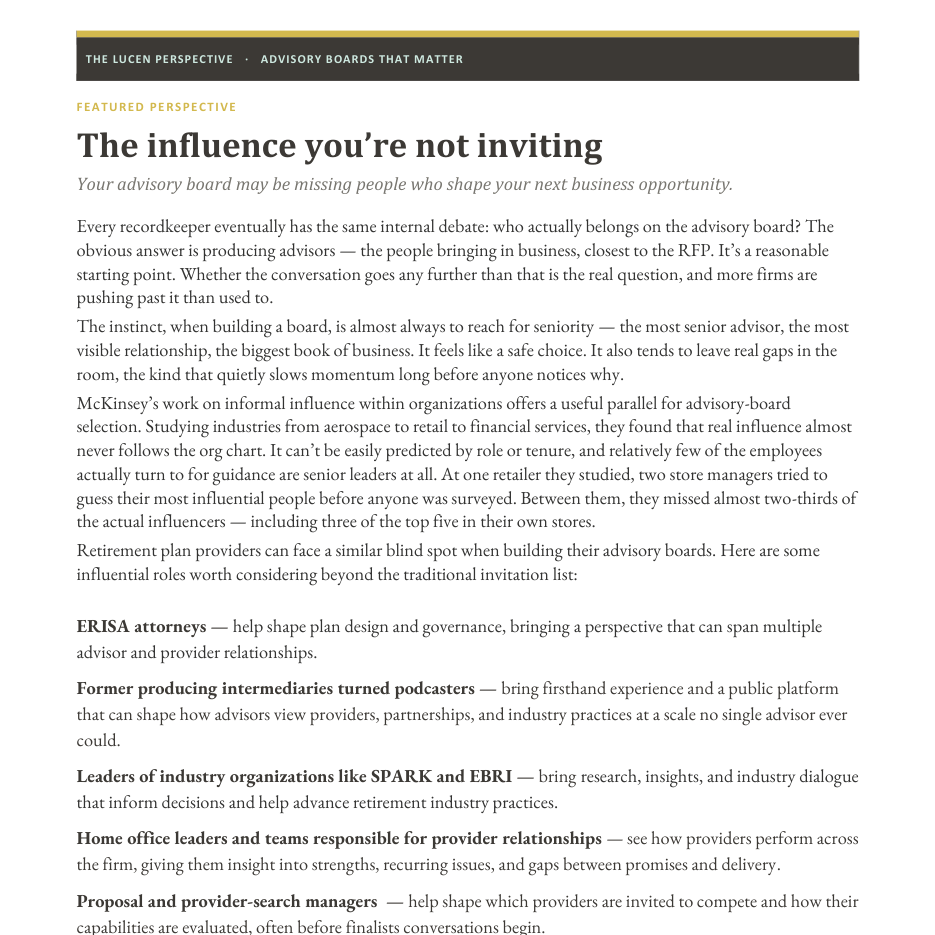
The influence you’re not inviting
Who belongs on a recordkeeper's advisory board? Using McKinsey's research on hidden influencers, the case for looking past seniority and production to ERISA attorneys, home-office teams, proposal managers and client-service leaders, and for giving some of them a table of their own.
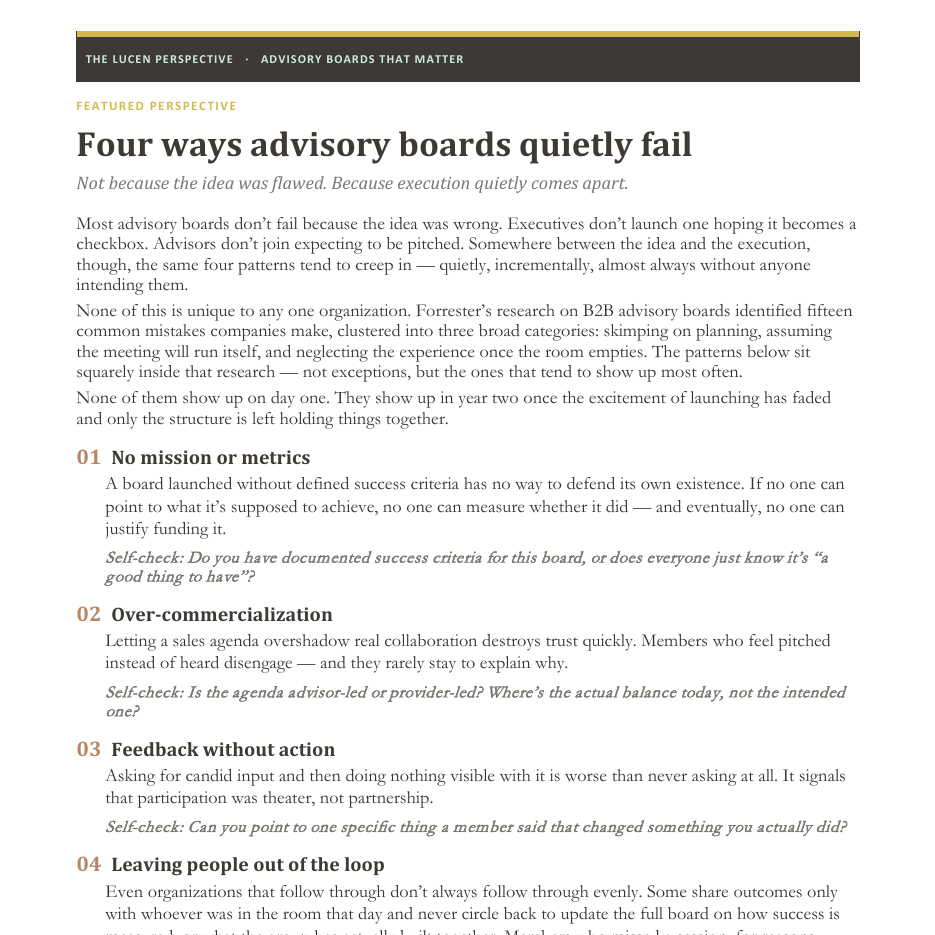
Four ways advisory boards quietly fail
The four patterns that quietly erode advisory boards by year two (no mission or metrics, over-commercialization, feedback without action, and leaving members out of the loop), each with a self-check question, framed by Forrester’s research on common B2B advisory board mistakes.
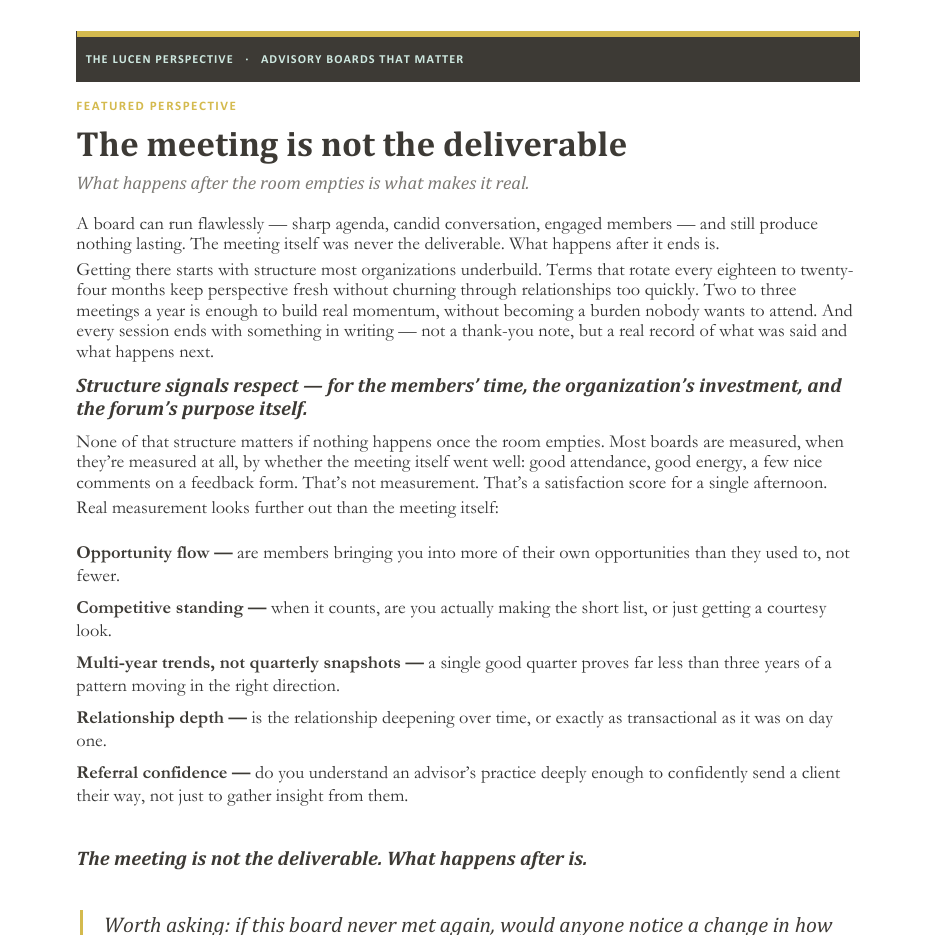
The meeting is not the deliverable
Why a well-run meeting is not the point: the structure that makes an advisory board work (rotating terms, two to three meetings a year, a written record of every session) and five longer-term measures of real impact, from opportunity flow to referral confidence.
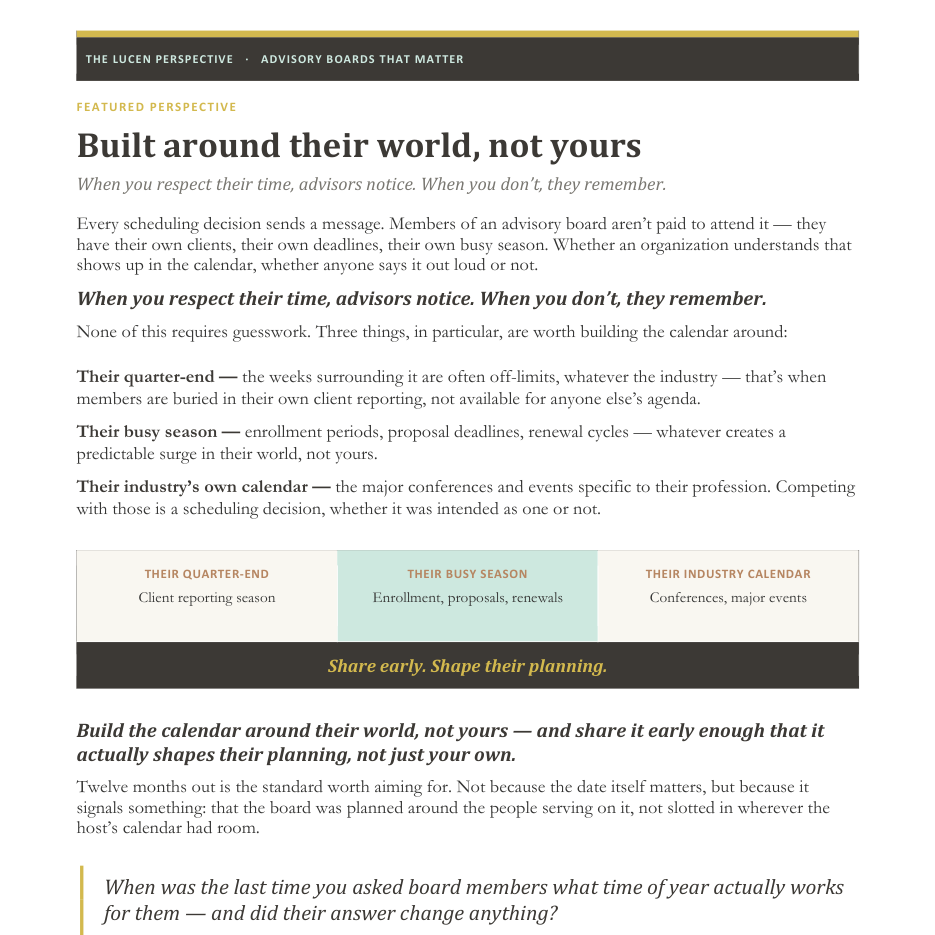
Built around their world, not yours
Every scheduling decision sends a message. Building the advisory board calendar around members' quarter-ends, busy seasons and industry events rather than the host's convenience.
The conditions for candor
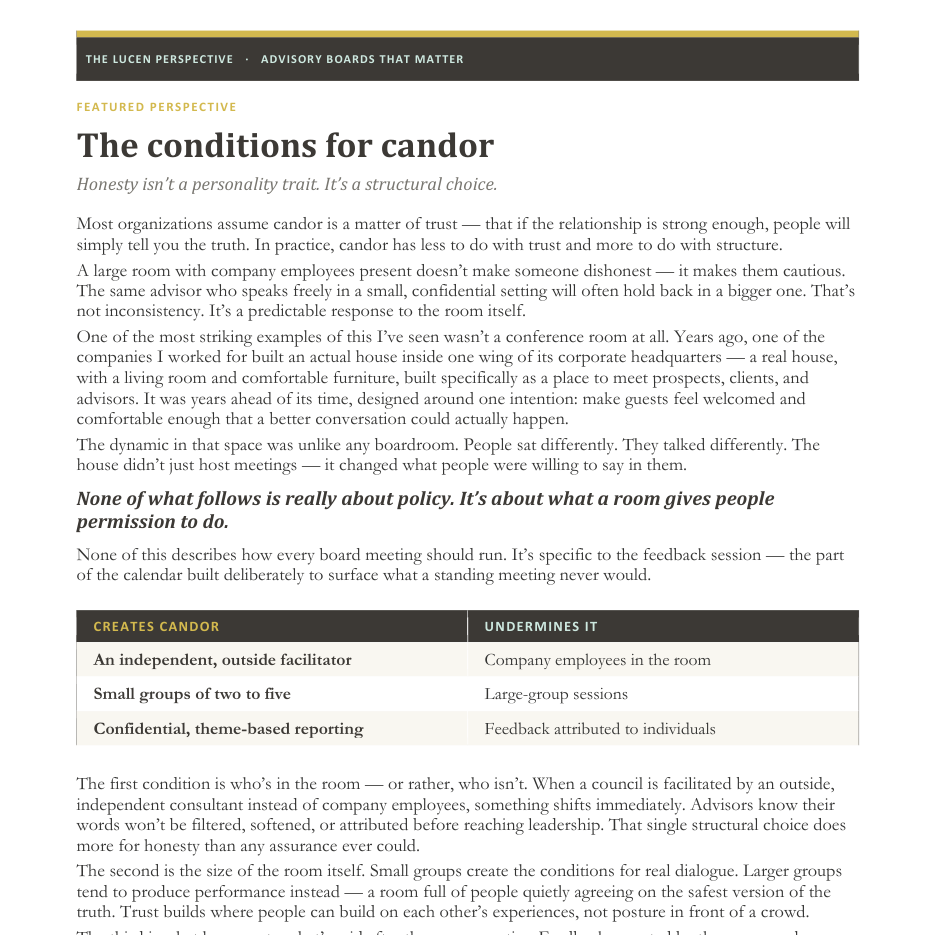
The structural conditions that produce honest feedback on an advisory board: independent facilitation, small groups, confidential reporting, told through the story of 'the House' built inside a corporate wing.
Where the gold lives
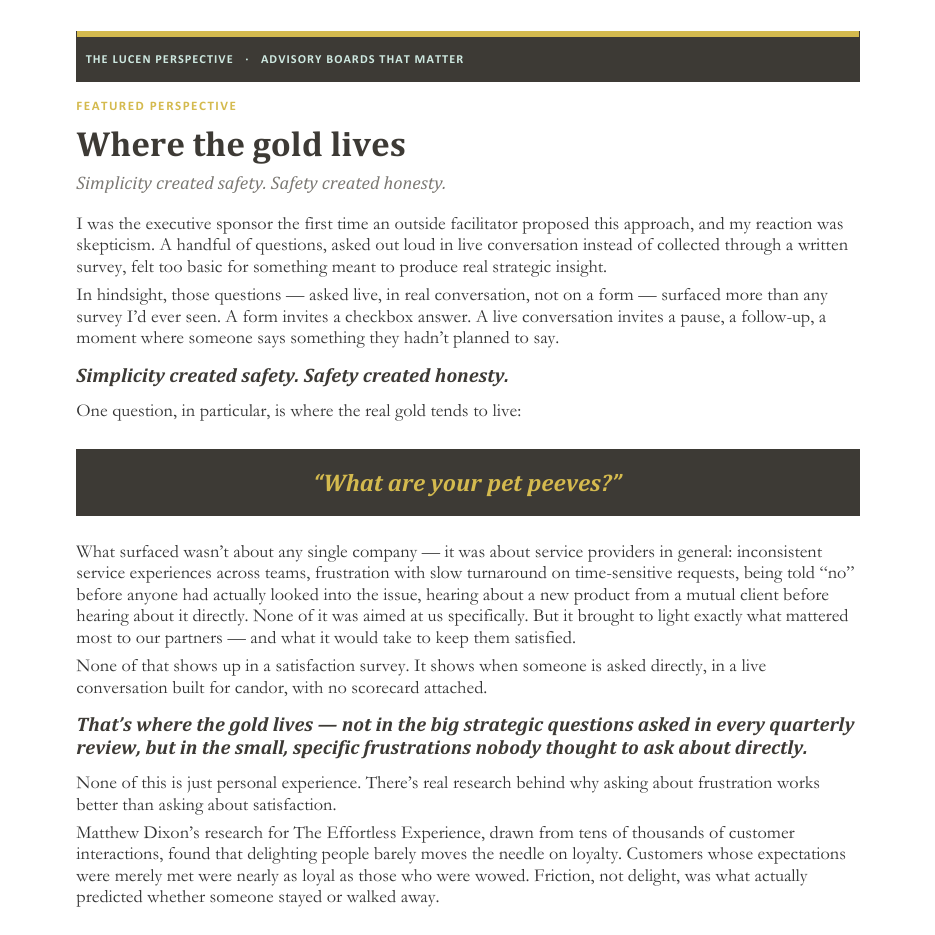
Why the simplest live question, “What are your pet peeves?”, surfaces more than any satisfaction survey: Barbara’s experience as an executive sponsor, backed by Matthew Dixon’s Effortless Experience research on friction and Christensen’s Jobs-to-Be-Done.
Opportunity or obligation?
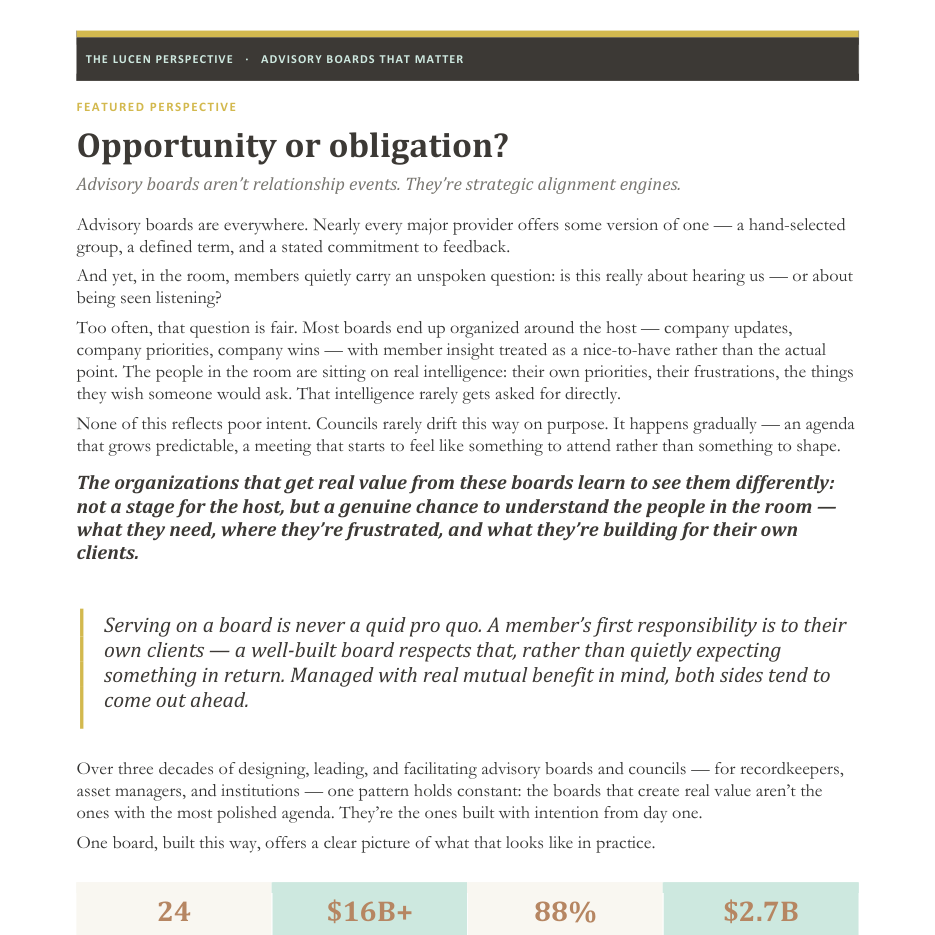
Advisory boards as strategic alignment engines rather than relationship theater, with the results of a real board (24 advisors, $16B+ AUM, $2.7B in new assets) and the 'never a quid pro quo' principle.